
By 2020, the trend that had been emerging over the previous 10 years, initially led exclusively by certain high-end manufacturers, had become firmly established as the new industry standard.
We are talking about large-format tiles, which are no longer limited to major manufacturers and have now become part of the mainstream market, produced by virtually all ceramic manufacturers.
Manufacturers competing at more competitive price points have managed to narrow the gap, offering impressive mid-range products with large formats, lightweight structures and reduced thicknesses while maintaining high durability.
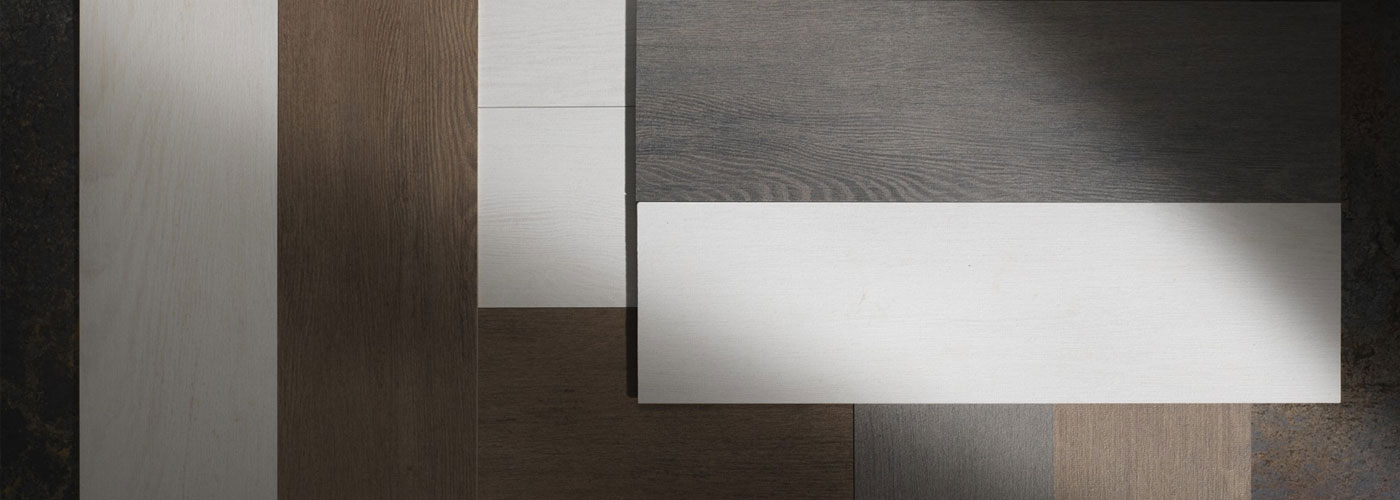
Current trends focus on natural, understated tones and large slab-like formats, with finishes that imitate natural materials such as stone, wood and cement.
Large rectangular formats have been in demand within the interior design industry for years, but affordable prices and accessible technologies were not previously available to meet that demand as they are today.
The natural consequence of this increase in format size has been a reduction in thickness, leading to high-quality, thin formats with a more technical appearance. This has become the new standard in the ceramic market, an industry that has evolved towards products perceived as highly technical and sophisticated.
Over the last 10 years, a reduction of more than 50% in the thickness of ceramic bodies and an increase of more than 300% in tile size have transformed the industry and expanded the limits of what is possible in ceramic production.
Larger sizes combined with reduced thicknesses help lower production costs. However, they also require the industry to adopt applications and solutions that improve mechanical strength, such as strengthening additives and changes in clay compositions.
After years of economic recession, ceramic manufacturers have been driven to improve productivity and competitiveness while reducing energy costs. Flexibility and rapid adaptation to market demands are essential.
European markets have consolidated and matured in their demand for large formats, making large, thin tiles the new industry standard.
The industry increasingly requires more technical solutions. For this reason, ACRILATOS works continuously to help the ceramic sector reduce and control costs, supporting the tile industry while developing increasingly advanced technical solutions to improve competitiveness and reduce production costs.